
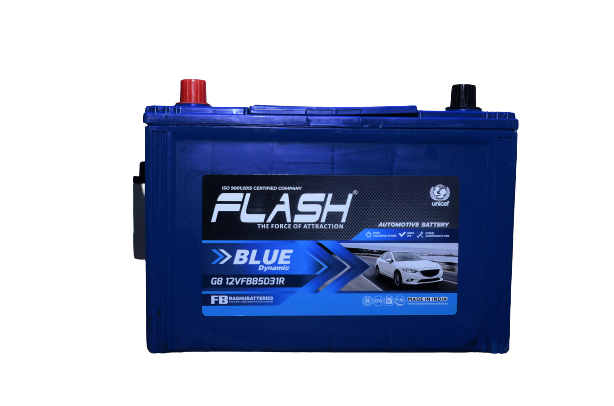
Understanding Cold Cranking Amps (CCA) and Reserve Capacity (RC) in Automotive Batteries
An engineering explanation of Cold Cranking Amps (CCA) and Reserve Capacity (RC), and why they are critical for vehicle ignition reliability in extreme climates.
Raghu Batteries Consulting Engineering Desk
Flash Batteries
Understanding Cold Cranking Amps (CCA) and Reserve Capacity (RC)
When purchasing an automotive car or SUV battery, consumers frequently look only at the Ampere-Hour (Ah) rating. However, for internal combustion engines, two far more critical technical metrics dictate starting reliability: Cold Cranking Amps (CCA) and Reserve Capacity (RC).
1. What is Cold Cranking Amps (CCA)?
Cold Cranking Amps measures the number of amperes a 12-volt battery can deliver at -18°C (0°F) for 30 seconds while maintaining at least 7.2 Volts.
2. What is Reserve Capacity (RC)?
Reserve Capacity is the number of minutes a fully charged 12V battery at 27°C can continuously discharge at a constant current of 25 Amperes before the terminal voltage drops below 10.5 Volts.
3. The Role of Calcium-Silver Alloy Metallurgy
Traditional antimonial lead alloys suffer from electrolyte gassing and water decomposition at highway engine bay temperatures (+50°C).
Flash Batteries utilizes a proprietary calcium-silver expanded grid formulation: